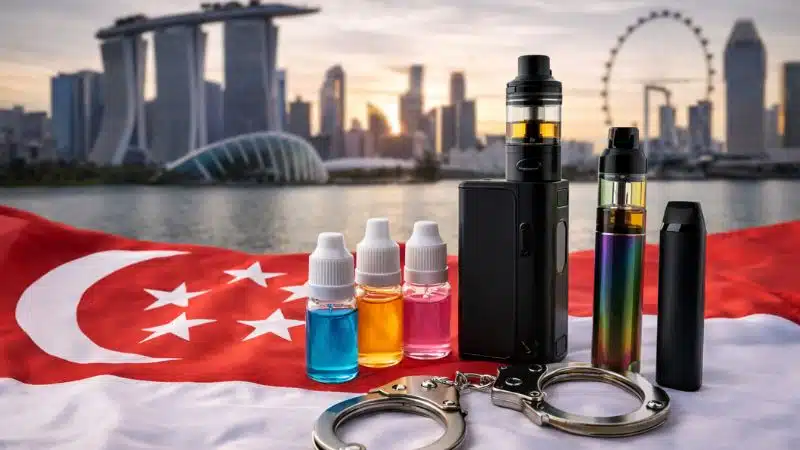
From 1 September 2025, Singapore imposed stricter restrictions on e-cigarettes, pods, and e-liquids, including harsher fines as well as mandatory rehabilitation and prosecution for repeat users of non-etomidate vapes. At the same time, the new regulations classified etomidate-laced vapes, known as Kpods, as Class C drugs, making possession, consumption, distribution, selling, and shipping vapes to Singapore criminal offences.
Below is a detailed overview of the vape laws in Singapore and the breakdown of penalties for each type of offence.
Key Takeaways
- Singapore banned vaping in 2018 by introducing restrictions in the Tobacco (Control of Advertisements and Sale) Act
- From 1 September 2025, the government intensified enforcement and applied higher penalties for e-vaporiser users
- The amendments to the Misuse of Drugs Act classified etomidate vapes as Class C drugs
- Possession, consumption, importing, trafficking, distributing and selling etomidate Kpods in Singapore are criminal offences
Is Vaping Legal in Singapore?
Singapore was among the first to ban vaping in 2018. However, vaping practice continued over the years and led to the popularity of pods laced with the anaesthetic drug etomidate. In turn, etomidate is known for producing effects resembling those of ketamine, which is a Class A drug. This similarity of the effects led to the coining and use of the term Kpods.
Recognising the adverse effect of etomidate e-vaporisers on users, which may include potential brain damage, the Government classified etomidate as a Class C drug. This classification made it illegal to possess, import, distribute, sell, and consume Kpods without authorisation. Additionally, the Government intensified its efforts to combat vaping in Singapore, subjecting offending individuals to higher fines, rehabilitation, and detention.
What Are Vape Laws in Singapore?
In 2018, Singapore introduced restrictions on vapes by amending the Tobacco (Control of Advertisements and Sale) Act (TCASA). The law made it illegal to import, distribute, offer for sale or possess for sale any food products, toys, devices, or articles that resemble, are designed to resemble a tobacco product, or are capable of being smoked. In 2025, the authorities intensified enforcement of TCASA restrictions on vapes through government action.
Starting from 1 September 2025, the Misuse of Drugs Act 1973 (MDA) includes etomidate and its analogues in the First Schedule of controlled substances, classifying them as Class C drugs. In turn, the Health Minister also announced that those who consume vapes mixed with etomidate will be treated no differently than those who consume hard drugs and narcotics.
The Government announced that the current restrictions on e-vaporisers can be further reinforced by potential amendments to other regulations, such as:
- Organised Crime Act 2015
- Online Criminal Harms Act 2023
- Corruption, Drug Trafficking and Other Serious Crimes (Confiscation of Benefits) Act 1992
Prohibited Vape-Related Activities in Singapore
Possession and Consumption of Vapes
In Singapore, the purchase and simple possession of vapes for personal use are offences under the Tobacco (Control of Advertisements and Sale) Act. The enhanced penalties after amendments in effect from 1 September 2025 include:
- First Time e-Vaporiser Offenders: Fines of $500 for those below 18 years old and $700 for adults.
- Second-Time e-Vaporiser Offenders: Attendance at rehabilitation for up to 3 months.
- Third-Time and Subsequent e-Vaporiser Offenders: prosecution and a maximum fine of $2,000.
At the same time, the penalties for purchase, possession, and consumption of etomidate e-cigarettes under Singapore law are stricter and include:
- First Time Etomidate e-Vaporiser Offenders: Fines of $500 for those below 18 years old and $700 for adults, as well as attendance at rehabilitation for up to 6 months.
- Second-Time Etomidate e-Vaporiser Offenders: Mandatory 6-month supervision, including drug testing and rehabilitation.
- Third-Time and Subsequent Etomidate e-Vaporiser Offenders: Supervision and drug testing for those below 16 years of age, and detention at the Drug Rehabilitation Centre (DRC) for treatment and rehabilitation, followed by 12-month supervision for individuals above 16 years of age.
Importing Vapes into Singapore
Importing simple (non-etomidate) vapes into Singapore is a straight criminal offence, which can result in arrest, prosecution, and a criminal record. The potential penalty for importing vapes in Singapore under the TCASA includes:
- First-Time Offenders: Fine up to $10,000, or 6 months of imprisonment, or both.
- Second-Time Offenders: Fine up to $20,000, or 12-months imprisonment, or both.
At the same time, importers of etomidate vapes face much higher penalties under the MDA, which include imprisonment between 3 and 20 years and 5 to 15 strokes of the cane.
Trafficking, Selling or Distributing Vapes
Similarly, trafficking, selling or distributing non-etomidate vapes can lead to similar penalties to those for importing.
In turn, traffickers, sellers, and distributors of etomidate vapes in Singapore can face between 2 and 10 years of imprisonment and 2 to 5 strokes of the cane.
Conclusion
The vape laws in Singapore are now strictly enforced and apply to both Singapore residents and foreigners. Meanwhile, etomidate-laced vapes known as Kpods were reclassified as a Class C drug, making their possession, consumption, trafficking, distribution, selling and importing a criminal offence. If you are interested in more information or face liability due to vape offences in Singapore, please don’t hesitate to contact the IRB Law team for an initial consultation.
FAQs
What happens if I’m caught vaping in Singapore for the first time?
If you are caught with vape in Singapore for the first-time possession of non-etomidate vapes, the penalty includes paying a fine of $700 for adults and $500 for those below 18 years old. Kpod consumption adds up to 6 months of rehab.
Can I go to prison for possessing a vape for personal use?
At the moment, simple possession of non-etomidate vapes for personal use may result in fines and, for repeat offenders, attendance of a rehabilitation facility. However, if you are caught with an etomidate-laced vape, you can face mandatory rehabilitation and supervision.
Can I bring my vape to Singapore when I’m only transiting through Changi Airport?
The Singapore Immigration & Checkpoints Authority (ICA) has intensified checks at the checkpoints in Changi Airport and prohibits the possession or transportation of any vapes, e-cigarettes, or e-liquids, including during transit. You are strongly advised to dispose of your vape before visiting Changi Airport.
Can my pass be cancelled, or can I be banned from re-entering if I’m caught with a vape as a foreigner?
Foreigners working in Singapore can face the same penalties as Singaporean citizens. Additionally, they may have their residence and employment passes revoked, followed by deportation and a ban on re-entry. The restrictions on e-cigarettes under Singapore law apply to tourists as well.
What happens if students are caught vaping in Singapore?
Students caught with a vape in Singapore may face fines as well as school-based penalties, such as detention, suspension, conduct grade adjustments, and rehabilitative counselling. The disciplinary actions in universities can include withdrawal of scholarship, eviction from hostels, and community service.